
It’s Okay to be Human: How Leaders Can Turn Vulnerability Into a Superpower
Discover the research-backed reasons why vulnerable leadership builds trust and drives performance, with insights from the world’s top companies.

Discover the research-backed reasons why vulnerable leadership builds trust and drives performance, with insights from the world’s top companies.

Knowing these 10 signs will empower your teams and leaders, strengthen trust and resilience, and help you drive business performance at work. This is a leadership game-changer!

It’s no wonder so many employees around the world are not engaged in their jobs. Most of us work for bad leaders in toxic cultures. The solution? Make “leading with vulnerability” a requirement!

In today’s rapidly evolving workplace, leaders are expected to be more authentic and human than ever—revealing their true selves, sharing their struggles, and being open to feedback. But how do you balance being approachable without losing authority? How can you connect deeply with your team while still maintaining the respect needed to lead effectively?

Not everyone expresses vulnerability in the same way nor does everyone find the same things to be vulnerable. We can be vulnerable during scary or big moments like receiving candid feedback from a trusted peer or when we need to let someone go because of performance issues. We can also be vulnerable every day with small moments such as praising someone on a team, asking for help, or even listening to someone.

Just over a week ago I wrote a post exploring why our perceptions of vulnerability change depending on if we are thinking about ourselves or someone else. Specifically, when we think of others being vulnerable we view them as courageous and bold but when we think of ourselves being vulnerable view ourselves as weak and incompetent.
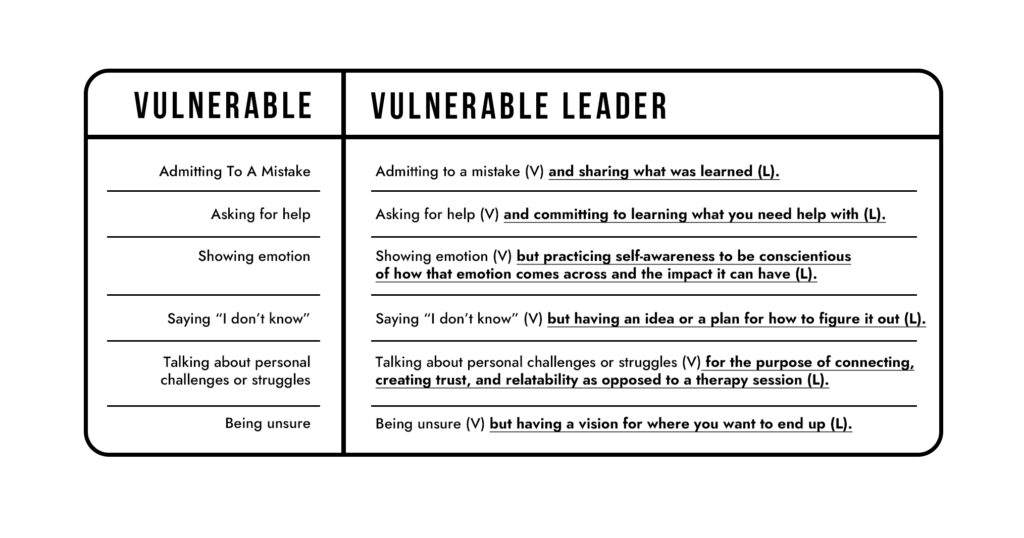
Brené Brown defines vulnerability as risk, uncertainty, and emotional exposure. In the context of working with other people, it’s usually doing or saying something that can expose you to the potential of emotional harm. For example, you share that you made a mistake on something, your peer takes that information and uses it as a way to keep you from getting promoted.