Let’s be honest, most CHRO groups out there are bad. They are expensive, filled with vendor pitches, and loaded with “fluff” resources that are outdated by the time they are published. That’s why I put together Future of Work Leaders. A CHRO group for people leaders who are moving beyond traditional HR to focus on the future of work and employee experience. No pitches, no selling, no fluff.
The community is focused on discussions, candid Q&A sessions, and sharing of resources and insights. Members include Lego, Novartis, PwC, Saks Global, and dozens of others. I’m just in the process of planning our annual in-person forum which will be at the end of March. if you want to learn more and request an invite go to Future of Work Leaders or email me directly Jacob[at]thefutureorganization[dot]com.

For decades, the professional blueprint was a straight line. You graduated, entered a functional track, whether it’s marketing, finance, or operations, and climbed predictably from associate to CMO or CFO. But today’s volatile market is making that linear progression obsolete. The path doesn’t exist anymore. Due to the rapid shift of consumer behavior and technological disruption, the traditional career ladder has reached its expiration date.
Tapestry, the global house of brands including Coach and Kate Spade, is leading the charge in redefining what growth looks like for a 20,000-employee organization. In this episode, Chief People Officer Denise Kulikowsky shares how Tapestry is proving that the most resilient organizations are those that stop helping people “climb” and start helping them “jump” by moving away from rigid career hierarchies and toward non-linear movement and strategic AI integration.
Listen to the episode here on Apple Podcast & leave a review!
The Non-Linear Journey: The New Standard for Career Growth
Denise’s own career is the perfect example of the non-linear journey. Originally trained in child psychology and social work in the New York City foster care system, her path to HR leadership was not a pre-planned route. It was a series of courageous leaps.
While she spent 17 years at Gap Inc. “learning the craft of HR,” her foundation was built on what she calls the “silver thread”: the ability to jump into roles without 100% of the functional knowledge, relying instead on critical thinking and the courage to assess new environments quickly.
Following a pre-charted course is a relic of the past. Climbing up the new career ladder today is more about maintaining a growth mindset that remains open to how opportunities reveal themselves.
For people leaders, this is a strategic imperative. Rigid career paths stifle high-potential talent that possesses the exact transferable mindsets needed for innovation. When you force talent into narrow functional silos, you lose the diverse perspectives that drive a consumer-centric business.
Building A Global Talent Pipeline Through The Swap Model
To institutionalize this non-linear career path philosophy, Tapestry launched “Talent Communities,” a program that formalizes “job swaps” to foster cross-functional agility. The mechanics are direct: a marketing professional in North America might swap roles with an e-commerce professional in Shanghai for six months.
This isn’t just about corporate roles. In APAC, Tapestry has even democratized this approach by swapping store employees into corporate positions, ensuring that the people closest to the consumer are the ones influencing corporate strategy.
The program strategically targets the Senior Manager and Director levels, a pivotal point where talent is agile enough to leap but senior enough to deliver immediate value. This model offers three distinct strategic advantages:
- Safety in Peer-to-Peer Contact: Swapping roles provides a built-in partner to help navigate the learning curve.
- Purposeful Skill Development: These are formal immersions designed to build specific, identified capabilities, not just rotations.
- Deep Cultural Immersion: For a global house of brands, understanding the nuance of a Shanghai consumer versus a New York consumer is the ultimate competitive advantage.
How Tapestry Normalizes AI Usage
As careers become more fluid, technology must serve as the propellant. Tapestry utilizes a “Walk, Run, Fly” AI strategy to integrate tools like ChatGPT and Claude into the daily workflow.
The biggest barrier to AI adoption isn’t the technology; it’s the “cheating” stigma. Employees often feel that using AI to draft a deck or generate talking points is a shortcut. Tapestry’s leadership is debunking this. The organizational stance is that AI is efficient and effective as long as the human remains accountable for the output.
Tapestry drives a culture of “co-creation” by bringing real AI use cases into leadership meetings. Rather than discussing tech in the abstract, leaders are tasked with solving real business problems through AI collaboration. This shift allows the organization to focus on high-value strategy rather than mundane drains.
Listen to the episode here on Apple Podcast & leave a review!
Success Profiles Over Functional Skills
The most profound shift at Tapestry is the move from mapping functional skills to building “Success Profiles” based on leadership competencies. This is grounded in the company value of “Magic and Logic.” The “logic” comes from an outside partner’s data on leadership success factors, while the “magic” is the alignment with Tapestry’s unique culture and growth strategy.
Rather than focusing on what an employee does, these profiles focus on how they lead. Tapestry has identified key competencies that are now the requirements for promotion and placement:
- Activate the Vision: The ability to build the brand from every seat in the company. This ensures that every function, from HR to finance, is obsessed with the consumer proposition.
- Lead with Courage: Taking accountability and making difficult decisions in an ever-changing landscape.
- Own Your Impact: Focusing on authenticity and how a leader’s presence and engagement bring strategies to life.
Conclusion: The Human-Led Future
We’re now in an era where work requires agility, non-linear movement, and AI fluency. But it must remain rooted in human critical thinking and consumer obsession. Tapestry’s model proves that when you dismantle the ladder, you create a more robust, versatile, and brand-focused workforce.
For CHROs, the challenge is clear: If the ladder is gone, are the “climbing” mechanisms in your organization actually holding your best talent back from their true potential?
Want to learn more? Listen to the full episode to hear the complete conversation with Denise Kulikowsky on the future of leadership and organizational strategy.
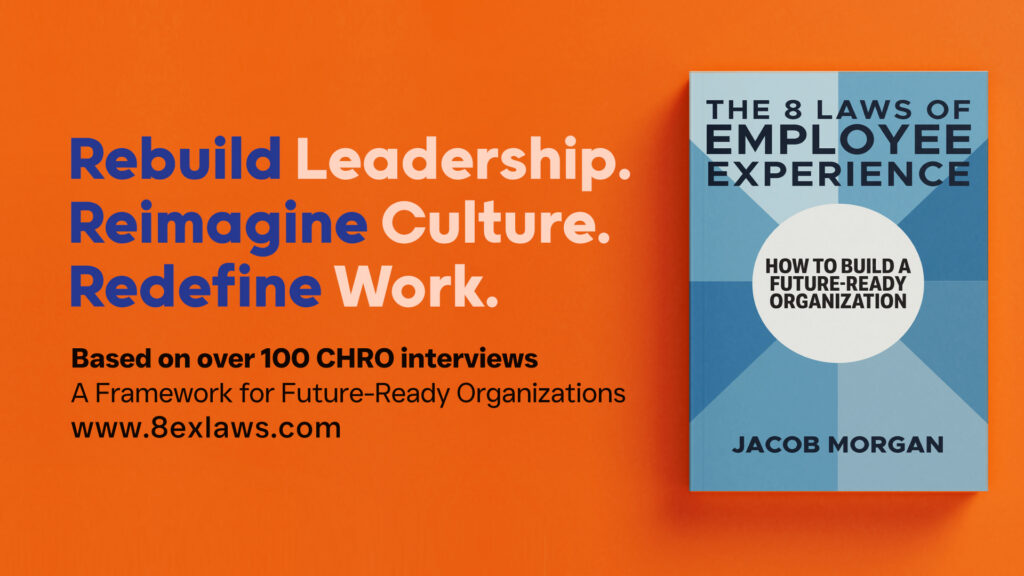
Organizations around the world have lost their way. It’s time to get back to basics and focus on what really drives people and performance. This is why I’m so very excited to share that after 2 years of research and writing, my new book The 8 Laws of Employee Experience: How to Build a Future-Ready Organization is finally available. Grab a copy at 8exlaws.com